


By Farooq A. Kperogi
There is really no opposition in Nigeria in the true sense of the word. There are only politicians who have been temporarily kicked out of the inner sanctum of power and influence but who share no fundamental difference with the current temporary occupants of the power structure. Nonetheless, if all the people vegetating on the margins of the power structure came together, they could easily displace those within it in 2027.
Although the coalition of so-called opposition politicians angling to get back to power in 2027 has not articulated a coherent blueprint to show that it will be different from President Bola Tinubu (I strongly believe they are indistinguishable from him), it can effectively instrumentalize the crying incompetence, in-your-face corruption, ethnic bigotry, insufferable arrogance, unabating misery and insouciance that have become the hallmarks of Tinubu’s administration to convince a traumatized nation that it can offer an alternative.
It doesn’t matter if they will replicate or even exacerbate Tinubu’s unrelieved disaster when they get to power. Even the prospect of temporary relief from Tinubu’s unending torment is enough to get most people to give them a chance. But they have shown that they lack the discipline, cohesion and foresight required to wrest power from Tinubu.
Even before they have had a chance to come together, they are splintered. This became clear in the aftermath of the Supreme Court ruling that restored David Mark’s leadership of the ADC. Neither Peter Obi nor Rabiu Kwankwaso said a word about it.
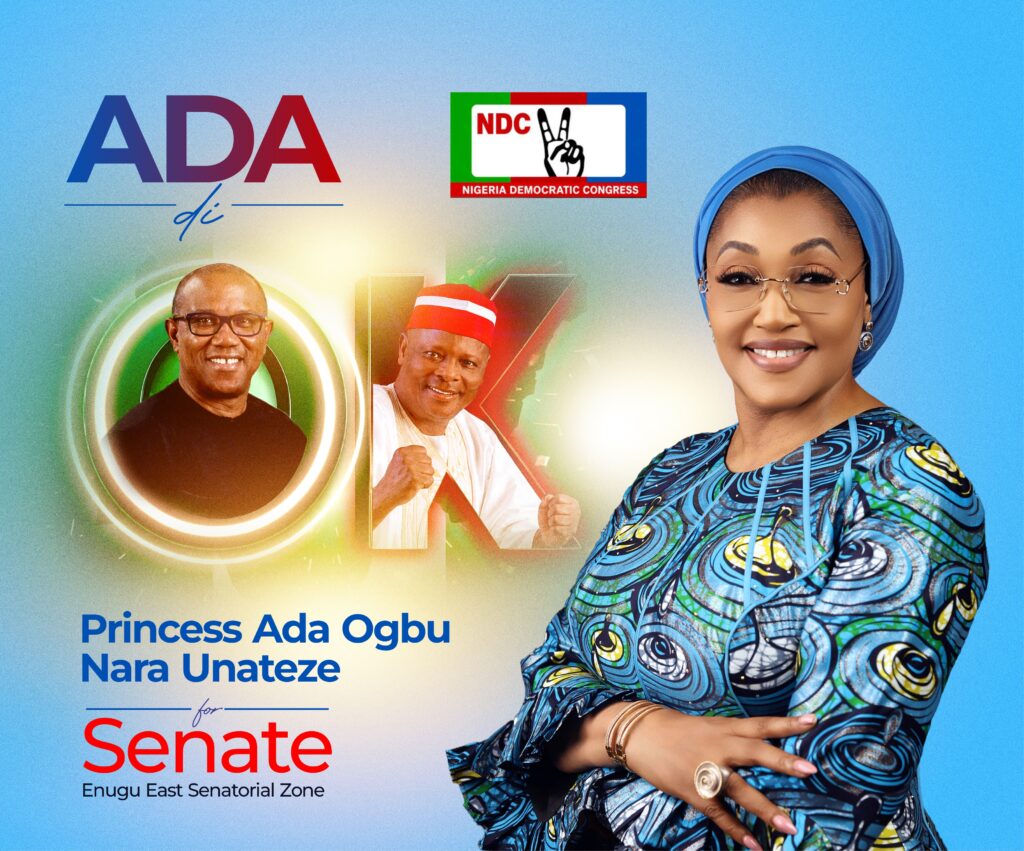
There are credible rumors that Obi and Kwankwaso didn’t react to the Supreme Court judgment because they had already moved on. They are said to be heading to the NDC and no longer care about what happens to the ADC.
In other words, we are back to the 2023 factionalization of the “opposition.” Both Obi and Kwankwaso appear to be allergic to the internal democratic processes of political parties. They want to be canonized as candidates without contest. Since they can’t find that, they are moving away.
Atiku Abubakar may emerge as the candidate of the ADC, if the ADC survives, that is. He might choose Rotimi Amaechi as his running mate. Should this happen, the opposition will be fatally fractured, as it was in 2023.
Even now, the verbal darts between Atiku’s supporters and Obi’s and Kwankwaso’s supporters are more caustic and more venomous than the exchanges between either camp and Tinubu’s supporters.
In fact, Tinubu is the net beneficiary of their maximalist posturing and internal warfare. Obi and Kwankwaso supporters say they would rather let Tinubu continue for another four years than support Atiku’s aspiration to replace him. Atiku’s supporters, for their part, say they would rather put up with another Tinubu term than support an Obi/Kwankwaso presidency.
Beyond their crude, petulant name-calling, Obi and Atiku supporters advance arguments in support of their positions, both of which benefit Tinubu. Obi’s supporters say since it isn’t the turn of the North to produce a president, Buhari having ruled for eight continuous years before Tinubu took over, if another southerner can’t be presented as the opposition’s candidate, they would rather support Tinubu to complete the South’s turn.
Atiku’s supporters, on the other hand, turn that logic around and say that if Obi is supported to displace Tinubu in 2027, he would “eat into” the North’s turn, which they believe should start in 2031. They don’t believe Obi’s promise to rule for only one term since there is no legally binding or constitutional constraint that would forbid him from reneging on his promise.
There is a precedent for this in Goodluck Jonathan, who was “allowed” to complete Umaru Musa Yar’adua’s term on the understanding that he wouldn’t seek another term in 2011. He not only ran and won in 2011, he ran again in 2015 and almost won.
So, the argument of Atiku’s supporters is that supporting Tinubu to complete his term benefits the North more than supporting Obi because there is certainty, in their reckoning, that power will move to the region without contest after Tinubu’s term. It’s irrelevant if Tinubu’s policies incinerate them before power rotates back to the North.
It isn’t the logic or admissibility of the arguments of both camps that is the issue here. The point at issue is that in fighting each other, the opposition is fighting for Tinubu. His economic strangulation of the masses of our people takes the back seat. The insecurity that is ravaging the country, which he seems either unable or unwilling to confront and stamp out, is rendered irrelevant.
In other words, Tinubu’s most potent weapon isn’t INEC with its partisan chairman or a compromised judiciary. It is the opposition. Interestingly, the two main groups in the opposition like to accuse each other of “working for Tinubu” to ensure that their candidate doesn’t win. The truth is that they are both assets to Tinubu and are working for him for free. They are both weapons fashioned against each other for the benefit of Tinubu.
And that’s why I consider Tinubu’s excessive, underhanded zealousness in suffocating the ADC and other opposition parties from becoming viable platforms to challenge him a self-sabotaging strategic blunder. He could have a clear win, because of the selfishness and disunity of the opposition, and still be dogged by a crisis of legitimacy because he didn’t allow a fair contest.
On April 23, I wrote a Facebook post about two contradictory impulses of Nigerian politicians. I said Nigerian politicians are some of the most incurably optimistic specimens of humans you can find on earth. That’s why you have opposition politicians who can’t even agree on who their candidate will be in 2027 say with cocksure certitude that they can wrest power from a man who defied all odds to get to power while out of it and has since consolidated power by ensuring that INEC and the judiciary are in his pocket.
But I also pointed out that Nigerian politicians can be some of the most cowardly people while outwardly projecting faux bravery. That is why a politician who has 32 governors, INEC, the judiciary, an unrivalled war chest and a gravely divided opposition is still so fearful of his chances of winning that he doesn’t want the opposition to even have a platform to challenge him.
Tinubu joked on April 14, 2026, that he could send Godswill Akpabio to the opposition to “scatter them.” Days later, on April 20, his chief of staff, Femi Gbajabiamila, publicly urged ADC lawmaker Leke Abejide to remain in the party so that he could “fight them” and “scatter them.” Abejide said yesterday that Gbajabiamila was only joking, just like his boss, Tinubu.
An English proverb says, “Many a true word is spoken in jest.” That is, people often reveal serious truths while pretending to joke.
ADC’s fate is currently hanging in the balance, and if the past is any guide, the David Mark leadership of the party might lose in the federal high court. That would be an avoidably self-inflicted political injury for Tinubu. He doesn’t need to use the instruments of the state to “scatter” the ADC, the NDC, the PRP or any other potential platform opposition politicians might need. The opposition is doing a better job “scattering” itself than he can ever do, even with the instruments of the state.
Tinubu may not need to defeat the opposition because the opposition appears determined to defeat itself. An opposition that lacks the self-denial, strategic patience and moral urgency necessary to galvanize popular resentment and win power doesn’t deserve power.
Until Atiku Abubakar, Peter Obi, Rabiu Kwankwaso and others understand that power is rarely handed to the disunited, the vain and the impatient, they will remain Tinubu’s most reliable unpaid campaigners.


