
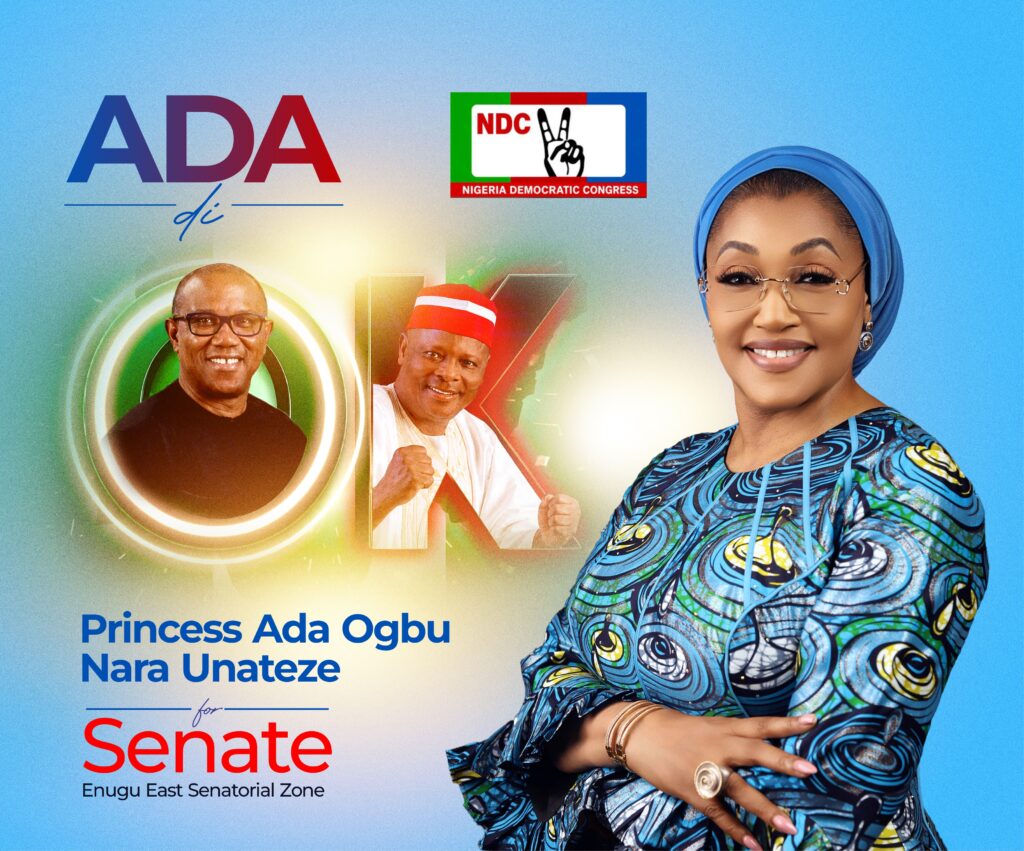


The Nigeria Democratic Congress (NDC) has moved to assert its authority over affiliated political support groups, declaring that all platforms and movements associated with the party, including the Obidient and Kwankwasiyya blocs, must operate strictly under its control as part of efforts to strengthen internal discipline and institutionalise the party.
The decision formed part of resolutions reached at the party’s Second National Executive Committee (NEC) meeting and was contained in a statement issued on Sunday by the National Publicity Secretary, Osa Director.
Under the theme of party institutionalisation, the NDC said it was determined to build a strong political organisation driven by structures and processes rather than personalities or special interest groups.
“The NDC is committed to building the party as a strong and enduring institution, with emphasis on party supremacy,” the statement said.
According to the party, all governments elected on its platform must work closely with party structures in formulating policies, programmes and appointments, except in the case of personal aides.
“The programmes, policies, and appointments (except personal staff) of all governments elected on the platform of the party must be made in consultation with the party structure,” it stated.
The party stressed that members must place the interests of the NDC above personal ambitions and political tendencies.
“The party remains supreme, and members are expected to align their personal interests and agendas with those of the party,” the statement added.
In what observers see as a direct message to influential political support groups within the party, the NDC declared that all affiliated organisations and non-governmental groups must function under the authority of the party.
“All affiliated groups and NGOs shall operate under the guidance and control of the party and must not function in parallel with, or independently of, the party structure,” the statement said.
The NEC also approved the establishment of a comprehensive Code of Conduct for party officials and candidates, with a committee headed by the National Legal Adviser tasked with developing the framework and operational guidelines.
To address post-primary tensions and internal grievances, the party announced the inauguration of a National Reconciliation Committee mandated to engage aggrieved members and promote unity ahead of future electoral contests.
The NDC further reiterated that it was not being built around any individual or political movement.
“The NDC is being built as an institution, not a personality cult, political movement, or Special Purpose Vehicle (SPV) to be used and discarded,” the party declared.
It urged members to remain committed to building a sustainable political platform capable of enduring beyond individual ambitions and electoral cycles.
The NEC also unveiled stringent financial accountability measures for party officers and candidates, insisting that all campaign funds and political contributions must be fully disclosed and channelled through designated party accounts.
“On financial probity, the party will enforce strict accountability in the management of party resources by all officers, and party funds must be used strictly for party business,” the statement noted.
The party added that candidates at all levels would be required to disclose all campaign-related funding and contributions to relevant party organs, including local government, state, zonal and national structures.
The resolutions are expected to shape the NDC’s internal operations ahead of the 2027 elections as the party seeks to consolidate its structures, strengthen discipline and manage the influence of powerful political movements operating within its ranks.


